


CalmGut Sleep | Nighttime Gut & Sleep Support
CalmGut Sleep | Nighttime Gut & Sleep Support
Calm Nights Start in the Gut
Rest that arrives on its own, rather than being forced. CalmGut Sleep is a gentle, non-sedating nighttime formula built to quiet the nervous system and ease the gut-stress signalling that leaves people tired but wired at the end of the day. It works by supporting the body's own calming pathways instead of overriding them, which is a slower approach than knocking yourself out and a considerably more sustainable one. No melatonin, no habit-forming ingredients, no proprietary blends — and an honest account below of which amounts match the research and which don't.
What It Supports
- Nervous system calm — L-Theanine at 200 mg, the amount used in the stress and sleep-quality research
- Winding down after demanding days — for the evenings when the body stays switched on long after you've stopped
- Nighttime digestive comfort — magnesium glycinate in a chelated form chosen for tolerability
- Natural transition into rest — glycine, which supports the drop in core body temperature that precedes sleep
- Gut-brain relaxation — because the system that keeps you alert at 11 p.m. runs through the gut as much as the head
Who Sleep Is For
Sleep is built for people who are exhausted but can't switch off — the mind that starts working the moment the lights go out, the body that stays braced after a demanding day, the 3 a.m. wake-up that has nothing to do with needing the bathroom. It suits anyone who has tried melatonin and found it either did nothing or left them foggy, anyone who wants to avoid building a dependency on anything sedating, and anyone already working on gut health who has noticed their worst nights follow their worst gut days. If you wake in the small hours rather than struggling to fall asleep, our piece on why the 3 a.m. wake-up happens explains what's usually behind it.
Ingredients (Per Serving)
Suntheanine L-Theanine — 200 mg
The ingredient with the strongest human evidence in this formula, included at the amount the research actually used. In a randomized, placebo-controlled crossover trial in 30 healthy adults, 200 mg of Suntheanine daily for four weeks improved sleep quality scores — specifically sleep latency, sleep disturbance, and reliance on sleep medication — alongside reductions in stress-related measures. L-Theanine promotes a calm, relaxed state without sedation, which is the entire premise of this formula: settle the system rather than switch it off.
Magnesium Glycinate (Albion TRAACS) — 300 mg
A chelated magnesium bound to glycine, chosen for absorption and for being far gentler on digestion than oxide or citrate forms, which is what matters in something you take every night. Magnesium is a cofactor in hundreds of enzymatic reactions, including several involved in nervous system regulation and muscle relaxation.
We are not citing a clinical trial here, and that is deliberate. The human evidence for magnesium glycinate specifically on sleep is thin — most of the sleep research uses different magnesium forms, different populations, and doses that don't map cleanly onto this one. Magnesium is in this formula for its established role in nervous system function and for the glycine it carries, not because a trial says this form at this amount improves sleep. Plenty of labels would cite a loosely related study anyway. We would rather tell you where the evidence runs out.
Glycine — 1,000 mg
A calming amino acid that supports the body's natural transition into sleep, in part by helping lower core body temperature — the physiological drop that normally precedes sleep onset. In a polysomnography study in adults reporting unsatisfactory sleep, 3 g of glycine before bed shortened the time to sleep onset and to slow-wave sleep, and improved subjective sleep quality without altering sleep architecture.
Ours is 1,000 mg — a third of that amount, and we're stating it plainly rather than letting the citation imply otherwise. Glycine is here as a supporting contribution and as the carrier for the magnesium chelate, not as a replication of that trial.
Passionflower Extract — 150 mg
A botanical with a long record of traditional use for the tired-but-wired feeling. In a double-blind, placebo-controlled crossover trial in 41 healthy adults, passionflower produced a significant improvement in subjective sleep quality compared with placebo. Two honest caveats: that trial found no significant change in objective polysomnography measures, and it used passionflower as a tea rather than a 150 mg extract, so the forms aren't directly comparable.
Lemon Balm Extract — 150 mg
A nervine herb used for centuries to ease nighttime tension and support a settled mind. Lemon balm is one of the oldest entries in the European calming tradition, and it pairs with passionflower for the same reason peppermint pairs with caraway — long combined use, complementary character. The controlled human research on lemon balm at this amount for sleep is limited, and we include it on traditional grounds rather than trial data.
Apigenin — 50 mg
A flavonoid found in chamomile, long associated with calm, restful evenings. Apigenin binds to benzodiazepine receptor sites in preclinical work, which is the mechanism usually offered for chamomile's reputation. Human research on isolated apigenin for sleep is still emerging, and there is no established dose. It is included at a modest amount for its traditional association rather than on the strength of clinical trials.
What's Actually in the Bottle
Most sleep labels won't show you which ingredients are doing real work and which are along for the ride. We will. Below is every ingredient, its exact amount, and an honest read on how that amount compares to the research.
| Ingredient | Per serving | Role | Dose vs. research |
|---|---|---|---|
| Suntheanine L-Theanine | 200 mg | Non-sedating nervous system calm | Matches the 200 mg used in the four-week sleep and stress trial |
| Glycine | 1,000 mg | Supports sleep onset and temperature drop | One third of the 3 g used in the cited study |
| Magnesium Glycinate (Albion TRAACS) | 300 mg | Nervous system cofactor; gentle chelated form | No trial cited — evidence for this form on sleep is thin |
| Passionflower Extract | 150 mg | Traditional calming botanical | Trial used tea, not extract; subjective improvement only |
| Lemon Balm Extract | 150 mg | Traditional nervine for evening tension | No established clinical dose for sleep |
| Apigenin | 50 mg | Chamomile-derived flavonoid | Human research still emerging; no established dose |
The honest picture: L-Theanine is the one ingredient here sitting at a dose the research supports, and we say so rather than implying the whole label does. Glycine is at a third of the studied amount. The magnesium is in a well-absorbed, gentle form but carries no sleep trial we're willing to stand behind. Passionflower, lemon balm, and apigenin are traditional inclusions with thin or emerging human evidence, and calling them anything more would be dishonest.
Compare that with the category norm: proprietary "sleep blends" that hide individual amounts, or formulas leaning on a heavy melatonin dose to force the issue. Nothing here is hidden and nothing here is sedating — and a label you can actually evaluate is the whole point.
The CalmGut Advantage
- Every dose disclosed — no proprietary blends, no "nighttime complex," no hidden amounts
- No melatonin, no habit-forming ingredients — nothing that builds tolerance or causes rebound wakefulness
- Non-sedating by design — built to help you wake rested rather than groggy
- Chelated magnesium — gentle enough for nightly use without the digestive complaints oxide forms cause
- Third-party tested before it ships — every production batch independently tested for identity, potency, and purity
Sleep pairs naturally with CalmGut Reset for full-day gut and stress support, since the calm you're after at 10 p.m. is downstream of how the gut handled the previous twelve hours, or with CalmGut Focus to balance daytime clarity against nighttime recovery.
Why You Can't Sleep, and Why Melatonin Often Isn't the Fix
Most people reach for melatonin when sleep falls apart. But melatonin is a timing signal, not a calming agent — it tells your body when to sleep, not how to wind down. If your nervous system is still braced for something, melatonin alone rarely changes that, which is why so many people report taking it, falling asleep, and waking three hours later anyway.
The more common drivers are chronic stress, cortisol that stays elevated into the evening, and a gut-brain axis running out of rhythm. A 2021 review in Gastroenterology describes the bidirectional signalling between the gut and the brain that shapes mood, arousal, and the body's stress response. When that system is out of balance, calm and sleep both tend to suffer together — which is why the worst nights so often follow the worst gut days. Our overview of how gut health shapes sleep covers the mechanism in depth.
This formula doesn't override your sleep system. It supports the calming side — magnesium, calming amino acids, and the parasympathetic shift — so the body can do overnight what it's built to do. If your sleep reliably falls apart during stressful stretches, our overview of how cortisol interferes with winding down explains the connection, and our full breakdown of sleep and gut support covers what actually addresses each driver.
Real Results From Real People
We're in our founding chapter, and we're looking for real customers willing to share their experience with CalmGut Sleep. If you've tried it and noticed a difference in how you fall asleep, stay asleep, or feel in the morning, we'd love to hear from you. Honest reviews from real people are how this brand grows. Email us at hello@organiccalmgut.com to share your story, and we'll send you a discount code on your next bottle.
Frequently Asked Questions
Will it make me groggy in the morning?
It's designed not to. The formula is non-sedating — it works by calming the nervous system rather than knocking you out, so the aim is waking rested rather than fighting through a hangover from your sleep aid.
Does it contain melatonin?
No melatonin and no habit-forming ingredients. Melatonin is a timing signal rather than a calming one, it's frequently dosed at ten to thirty times what the body produces, and it does nothing for a nervous system that won't stand down. We left it out on purpose.
Why is the glycine only 1,000 mg when the study used 3,000?
Capsule space, and we'd rather answer that directly than let the citation do the implying. Three grams of glycine is roughly five capsules on its own, which would leave no room for anything else. We chose a formula built around L-Theanine at its full studied dose with glycine supporting it. If glycine specifically is what you want at the studied amount, a standalone glycine powder will serve you better than this will — it's inexpensive and it mixes into water easily.
How long until I notice a difference?
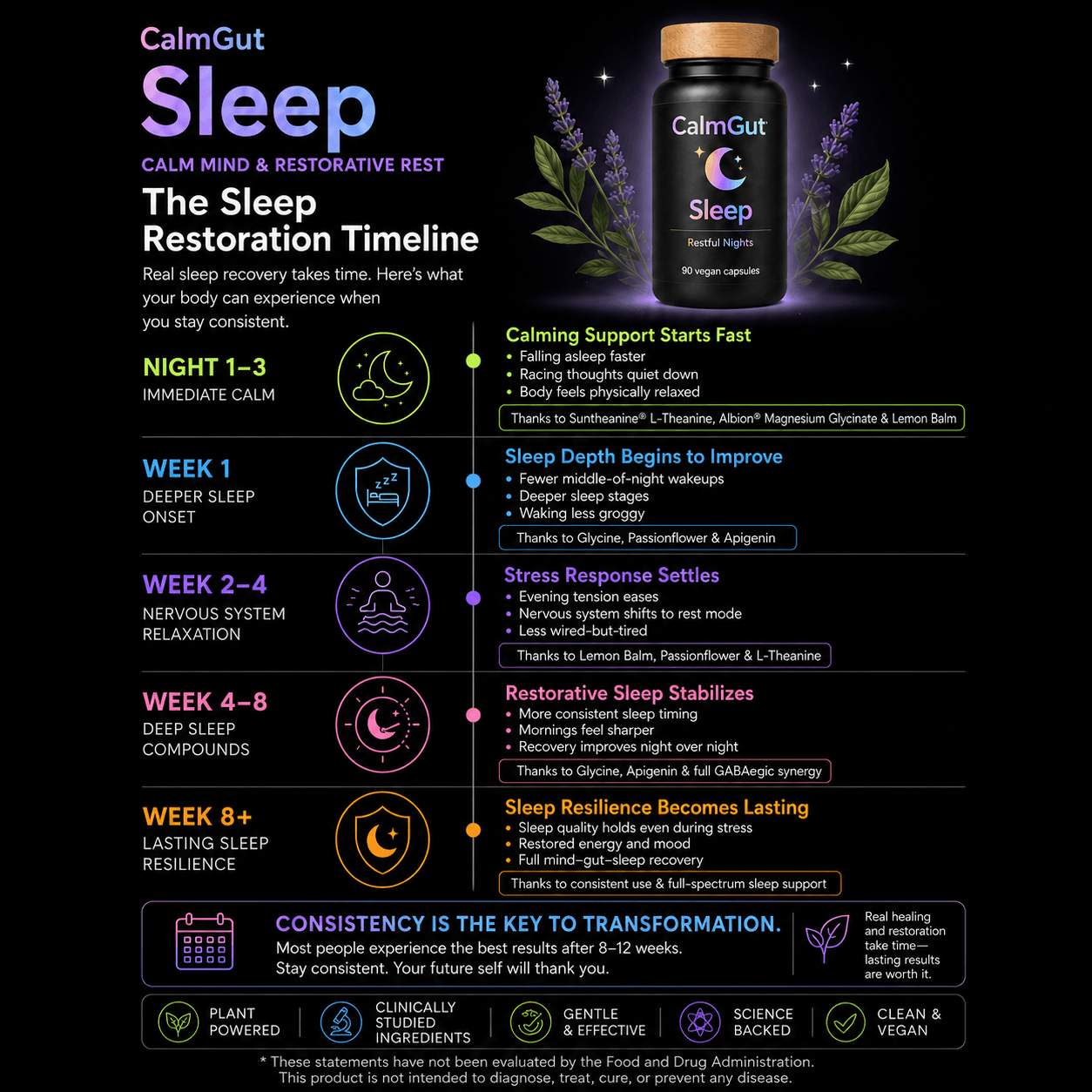
Many people notice calmer evenings within the first few nights. The four-week L-Theanine trial measured its improvements over that full window, so give it two to four weeks of consistent nightly use before judging it.
Is it safe to take every night?
The formula is built to be gentle and contains nothing known to build tolerance or cause rebound wakefulness, so it's designed for nightly use. As always, check with your healthcare provider about your own situation, particularly if you take other medication.
Can I take it alongside a prescription sleep aid?
Ask your prescriber first. Passionflower and lemon balm both have calming properties that could add to the effect of a sedative medication, and that isn't a combination to work out on your own. This is a question for the person managing your prescription, not for a product page.
Will the magnesium upset my stomach?
Much less likely than most magnesium supplements. Chelated glycinate is the gentlest common form — the loose stools and cramping people associate with magnesium mostly come from oxide and citrate, which are poorly absorbed and pull water into the bowel. That tolerability is the main reason this form is in a nightly formula.
Why apigenin instead of chamomile?
Apigenin is the flavonoid generally credited for chamomile's calming reputation. Using the isolated compound means a known, disclosed amount rather than a variable extract, which fits how we build everything else. The trade-off is honest: the human research on isolated apigenin is thinner than the traditional record for chamomile itself.
What if I wake at 3 a.m. rather than struggling to fall asleep?
Different problem, and worth naming. Middle-of-the-night waking is more often tied to blood sugar, cortisol rhythm, or alcohol than to difficulty winding down. This formula addresses the settling side. Our piece on the 3 a.m. wake-up covers the more likely causes.
Can I take it with the other CalmGut formulas?
Yes. Sleep stacks with Reset, Focus, Bloat, Morning and Glow. Many people take Focus in the morning, Reset with meals, and Sleep before bed. One note: CalmGut Focus also contains 200 mg of L-Theanine, so running both puts your daily total at 400 mg — within the range studied, but worth knowing rather than discovering.
Trust & Quality
- Third-party tested before it ships — every production batch independently tested for identity, potency, and purity
- No melatonin, no sedatives, nothing habit-forming — built for nightly use without dependency
- Non-GMO ingredients — with no fillers, dyes, or artificial additives
- Made in the USA — in a facility operating under current Good Manufacturing Practices
How to Use
Take 3 capsules 30 to 60 minutes before bed, or as directed by your healthcare professional. Use consistently for two to four weeks to let the calming pathways settle into a rhythm, since the L-Theanine research measured its effects across a four-week window rather than a single night. Subscribing saves 20% on every order and is the simplest way to stay consistent through a full cycle. You can cancel any time.
Ready to fall asleep without the fight? Add Sleep to your routine, and if your evenings are unsettled because your days are, consider pairing it with the Reset gut foundation formula for the underlying support.
Important Note
These statements have not been evaluated by the Food and Drug Administration. This product is not intended to diagnose, treat, cure, or prevent any disease. Individual results may vary. Consult your healthcare provider before starting any new supplement, especially if you are pregnant, nursing, taking medication, or managing a health condition.
Magnesium and medication timing: magnesium can reduce the absorption of several medications taken at the same time, including tetracycline and quinolone antibiotics, thyroid medication such as levothyroxine, and bisphosphonates. If you take any of these, separate them from this product by several hours and follow your healthcare provider's or pharmacist's guidance on timing.
Calming botanicals and sedatives: this product contains passionflower and lemon balm, both of which have calming properties that may add to the effects of sedative medication, sleep aids, or alcohol. Do not combine without speaking to your healthcare provider, and do not drive or operate machinery until you know how this product affects you.
Want to save more? Explore curated bundles →
Couldn't load pickup availability


Why CalmGut Is Different
-
🌿 Organic Where It Matters
Thoughtfully formulated with organic and non-GMO ingredients where possible.
-
🧪 Third-Party Tested
Every formula is independently tested for quality, purity, and consistency.
-
🏭 GMP Manufactured
Produced in certified facilities following strict quality and safety standards.